
Editor’s note: It may seem paradoxical for an economy to pursue an industrial strategy in order to go “green”, but that is the approach of South Korea, writes John Mathews of LUISS Guido Carli University, in Rome, and Macquarie University, in Sydney. He also identifies similarities with China’s determination to transition from a “brown” to a “green” economy. ...
Editor’s note: The upcoming sequel to the 1992 Earth Summit, once again to be held in Brazil, will provide fresh opportunities to draft a common global agenda to safeguard the well-being of humanity -- and the planet. But according to Earth Summit veteran Mukul Sanwal serious differences over the best developm...
Editor’s note: Populations across Asia are rapidly ageing. But few countries are prepared for the coming demand for elderly care, say Fung Global Institute Senior Fellow Arthur Kleinman and his Harvard University colleague Hongtu Chen. So far, many Asian societies have relied on families to care for thei......
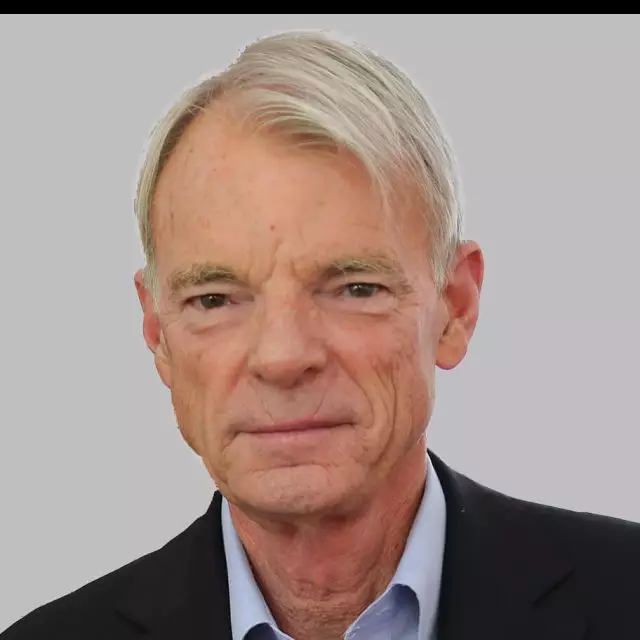
Michael Spence succinctly describes how the recent period of growth in developing countries is leading to a convergence with the advanced countries, or developed world. ...
This is a unique insider account of the new world of unfettered finance. The author, an Asian regulator, examines how old mindsets, market fundamentalism, loose monetary policy, carry trade, lax supervision, greed, cronyism, and financial engineering caused both the Asian crisi ...
Human Sciences - A Lens for Seeing China More Deeply
"I think this balances nicely the pictures we have from economics, politics and security studies." [Arthur Kleinman, Senior Fellow, Fung Global Institute]
Lessons for Economists from the Financial Crisis
"I think there is an obligation on economists and financial theorists to think about their models and to think about whether they do need amendment." [Howard Davies, Project Advisor, Fung Global Institute]
Charter Cities - The Hong Kong Model
"The vision for a place like Honduras is something like the Hong Kong of the 1950s and 60s, A place where people can come and ultimately have a better life." [Paul Romer, NYU Stern School of Business]
Global Re-Balancing Underway
"There are signs that the trends are moving in a slightly more balanced direction." [Howard Davies, Project Advisor, Fung Global Institute]
IMD Wednesday Webcast Series
"We're trying to understand different aspects of the global economy." [Xiao Geng, Director of Research, Fung Global Institute, with Senior Fellow Jean-Pierre Lehmann]
Regulatory Changes Since the Global Financial Crisis
"....(the) regulators, the central bankers, the economists, need to watch very carefully what is going on, to be sure that we have set the balance right." [Howard Davies, Project Advisor, Fung Global Institute]
Evolving a Stronger Global Regulatory System
".... we do need to get to a position, where there is a kind of international policeman of regulation." [Howard Davies, Project Advisor, Fung Global Institute]
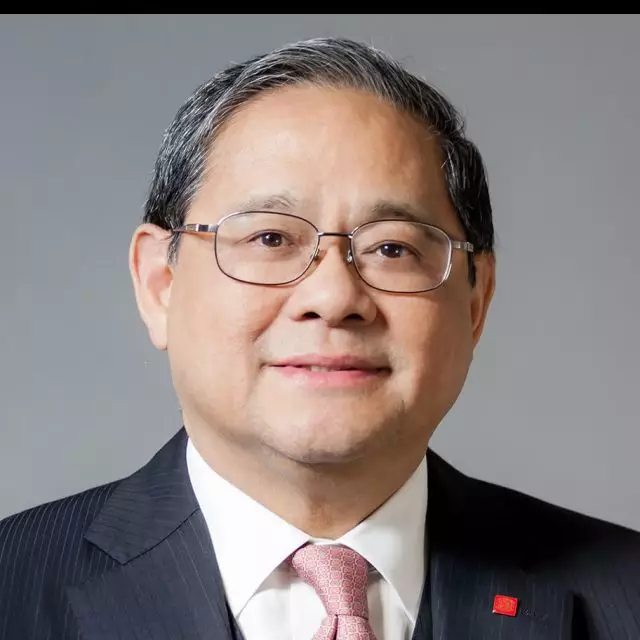
Liu Mingkang appointed as Distinguished Fellow
Appointment of Liu Mingkang, former Chairman of the China Banking Regulatory Commission, as first Distinguished Fellow. Mr Liu will provide strategic input to the Institute's leadership on research.
Charter Cities - A Commitment to Choice
"....you can think of starting entirely new cities and letting people choose whether to join them." [Paul Romer, NYU Stern School of Business]
Charter Cities - A Question of Governance
"Government should not be involved in for-profit opportunities on returns in investments. The commercial sector should be quite separate from the system of governance. [Paul Romer, NYU Stern School of Business]
World Trade and The Rising Risk of Protectionism
"There is a risk that there will be another downturn ...(and) some fledgling indications of a greater willingness to restrict trade." [Patrick Low, World Trade Organisation and Fung Global Institute]
Convergence - Past Causes, Present Challenges
"..there's a reasonably good chance that the core of Europe will get through this and get through it stronger." [Michael Spence, Fung Global Institute]
The WTO is "A Lot More than Doha"
"There is a feeling that the WTO is embattled because we haven't been successful in progressing the Doha Round." [Patrick Low, World Trade Organization and Fung Global Institute]
Another Challenging Year for the Global Economy
"2012 is really the year where there has to be a very robust global response to...various threats and pressures." [Jean-Pierre Lehmann, Fung Global Institute]
China and the Global Economy in 2012
"China's main contribution would be to maintain stable growth which further reduces external surplus." [Nicholas R. Lardy, Peterson Institute for International Economics]
Understanding China's Economic Imbalances
"...(China's) consumption share of GDP is the lowest of any country... (and) the share of output that's being devoted to investment is unusually high." [Nicholas R. Lardy, Peterson Institute for International Economics]
Impact on China of Europe's Financial Crisis
"China should be thinking about how to live with a 7% rate of growth (maybe even 6.5%) ...until Europe begins to recover." [Nicholas R. Lardy, Peterson Institute for International Economics]
WTO Ministers Face a World that's Moved on
"...the G20 leaders instructed their trade ministers when they meet to come up with fresh and credible approaches." [Jean-Pierre Lehmann, Fung Global Institute]
Multilateral Trade Rules an Insurance Policy
"It's absolutely important that we act together, otherwise we'll act separately." [Jean-Pierre Lehmann, Fung Global Institute]
Why the WTO Remains Relevant
"The true value of [the WTO] has become apparent in recent years ... when the threat of protectionism has reared its ugly head." [Stuart Harbinson, Sidley Austin LLP]
Changes that Could Strengthen the WTO
"There are always ways in which improvements can be brought about, and I think this is particularly in relation to the WTO's negotiating role." [Stuart Harbinson, Sidley Austin LLP]
The TPP and the Accession of Russia
"[The progress of the Trans Pacific Partnership negotiations] would give the signal that a large part of the world economy is wanting to move ahead into new areas" [Stuart Harbinson, Sidley Austin LLP]
New Responsibilities in Global Governance
"Maybe we'll have new institutions ... that we need that we haven't thought of yet. That I think is in the future." [Michael Spence, Fung Global Institute]
The Power of Learning on Demand
"The hunger to know in Asia today is probably much greater than the hunger to know in the United States" [John Seely Brown, Deloitte Center for the Edge]
On the Continuing Importance of Trade
"By lowering barriers to trade and investment we have added one trillion dollars annually to the economy of the US alone."
[James Bacchus, Global Practice Group, Greenberg Traurig LLC]
Going from "Push" to "Pull" Learning
"How do we create a context where whatever we're doing we'll be able to pick up new information on the fly...?" [John Seely Brown, Deloitte Center for the Edge]
Climate Change and Global Governance
"Economically, we are not going to be able to succeed ... unless we find a sustainable way to grow." [James Bacchus, Global Practice Group, Greenberg Traurig LLC]
For Next Generation Economists
"You're actually seeing ... some kind of expansion of the boundary of disciplines that moves us to a more realistic view of seeing the world" [Michael Spence, Fung Global Institute]
Convergence - the world's next story
"(Is) the crisis, its aftermath and now the instability in Europe going to derail the whole thing? I think the answer to that is probably 'no'." [Michael Spence, Fung Global Institute]
"Re-Shoring" more like "Mutual Outsourcing"
"US companies are outsourcing (assembly) to China... But we can also say that Chinese companies are outsourcing (design) to the US." [Geng Xiao, Fung Global Institute]
Financial Reform Requires New Mindset
"Mainstream economics is deeply flawed... But there is no alternative because the new complex economics has not yet been fully accepted." [Andrew Sheng, Fung Global Institute]
Providing Business-relevant Research
"Part of the purpose is to bring businesses into the discussion of achieving important global goals: stability, sustainability, adaptability." [Michael Spence, Fung Global Institute]
Taking Climate Change Seriously
"In terms of multinationals and large Asian companies, most businesses have actually set targets for reducing the carbon emissions" [Pamela Mar, Fung Global Institute]
A Think-tank with a Difference
"The Fung Global Institute will really work on engaging (business) executives in its studies" [Donald Lessard, Fung Global Institute]
The World's Economy in Transformation
"There's a great deal of a need for a sophisticated think-tank to be thinking through what are the forces of this transformation." [Jean-Pierre Lehmann, Fung Global Institute]
Understanding China's 12th Five-year plan
"It's very important because it tries to change the growth model of China from export-led to consumption-led." [Xiao Geng, Fung Global Institute]
Making Global Issues Relevant to Business
"Our objective is to analyse (global issues) from Asian perspectives and make them digestible to the business community." [Victor Fung, Fung Global Institute]
One of the first Global Think-Tanks in Asia
"We will draw out the voices of Asia, interpret and translate Asian views and thinking and engage with the world community." [Andrew Sheng, Fung Global Institute]
A Rapidly Changing World Demands New Thinking
http://www.fungglobalinstitute.com
The Fung Global Institute aims to inform global policy and action towards a prosperous and sustainable future for all